Top 20 Best-Selling Manga of All Time in Japan: 日本で人気の漫画 歴代トップ20
Japanese manga and anime are now a major part of global entertainment. Whenever I check social media or streaming platforms, I see fans from all over the world talking passionately about Japanese stories.
This made me wonder: Do the anime that people love overseas today match the classic manga that have sold the most copies in Japan’s history?
In this post, I will look at the Top 20 best-selling manga of all time in Japan and compare them with current global trends. After that, I would like to share my own memories of the anime and manga I grew up with in my 40s, as well as the modern series that moved me as an adult.
1. Japan’s Top 20 Best-Selling Manga and Global Trends Today
How Japanese Hits Were Born: Magazines, Books, TV, and Merch
There is a unique system behind how Japanese manga and anime grew so big over the decades:
①Manga Magazines:
First, many stories are published in weekly or monthly manga magazines like Weekly Shonen Jump, Weekly Shonen Champion, and CoroCoro Comic. Artists compete closely through reader surveys to keep their series alive.
②Collected Volumes (Tankobon):
Popular chapters from these magazines are collected and published as individual paperback books. The total number of these books printed is what makes up the “cumulative circulation” in the ranking below.
③TV Anime, Goods, and Movies:
When a manga becomes a big hit, it gets adapted into a TV anime. Once the TV show becomes popular, companies release character goods, toys, and feature films. This wide media mix brings in even more fans, which pushes sales of the original manga even higher.
④Reruns Across Generations:
In Japan, popular anime were broadcast again and again as reruns on TV. Because of this, not only kids watching in real time, but also younger siblings and parents watched the same shows. This helped turn many series into national and global classics.
A Modern Shift: Print Sales Are No Longer the Only Measure
Today, with the rise of digital comics and new forms of entertainment, the circulation of traditional paper manga magazines has dropped sharply. At the same time, streaming platforms like Netflix increasingly fund and release original anime directly to global audiences. Because of this, physical book sales alone do not tell the whole story of what is popular right now.
Is your favorite manga on this list? Take a look at the ranking below!
Top 20 Best-Selling Manga in Japan (with Official English Titles)
|
Rank |
Title (English / Japanese) |
Author |
First Vol. Released |
Total Copies in Circulation |
Main Publisher(s) |
|
1 |
One Piece
『ONE PIECE』 |
Eiichiro Oda |
Dec 1997 |
Approx. 600 million |
Shueisha |
|
2 |
Golgo 13
『ゴルゴ13』 |
Takao Saito |
Jun 1973 |
Approx. 300 million |
Leed / Shogakukan |
|
2 |
Doraemon
『ドラえもん』 |
Fujiko F. Fujio |
Jul 1974 |
Approx. 300 million |
Shogakukan |
|
4 |
Case Closed (Detective Conan)
『名探偵コナン』 |
Gosho Aoyama |
Jun 1994 |
Approx. 270 million |
Shogakukan |
|
5 |
Dragon Ball
『DRAGON BALL』 |
Akira Toriyama |
Sep 1985 |
Approx. 260 million |
Shueisha |
|
6 |
Naruto
『NARUTO -ナルト-』 |
Masashi Kishimoto |
Mar 2000 |
Approx. 250 million |
Shueisha |
|
7 |
Demon Slayer: Kimetsu no Yaiba
『鬼滅の刃』 |
Koyoharu Gotouge |
Jun 2016 |
Approx. 220 million |
Shueisha |
|
8 |
Black Jack
『ブラック・ジャック』 |
Osamu Tezuka |
May 1974 |
Approx. 176 million |
Akita Shoten / Tezuka Prod. |
|
9 |
Slam Dunk
『SLAM DUNK』 |
Takehiko Inoue |
Feb 1991 |
Approx. 170 million |
Shueisha |
|
10 |
KochiKame: Tokyo Beat Cops
『こちら葛飾区亀有公園前派出所』 |
Osamu Akimoto |
Jul 1977 |
Approx. 156.5 million |
Shueisha |
|
11 |
Jujutsu Kaisen
『呪術廻戦』 |
Gege Akutami |
Jul 2018 |
Approx. 150 million |
Shueisha |
|
12 |
Attack on Titan
『進撃の巨人』 |
Hajime Isayama |
Mar 2010 |
Approx. 140 million |
Kodansha |
|
13 |
Bleach
『BLEACH』 |
Tite Kubo |
Jan 2002 |
Approx. 130 million |
Shueisha |
|
13 |
JoJo’s Bizarre Adventure
『ジョジョの奇妙な冒険』 |
Hirohiko Araki |
Aug 1987 |
Approx. 130 million |
Shueisha |
|
15 |
Kingdom
『キングダム』 |
Yasuhisa Hara |
May 2006 |
Approx. 120 million |
Shueisha |
|
16 |
Touch (No official English print edition)
『タッチ』 |
Mitsuru Adachi |
Dec 1981 |
Approx. 100 million |
Shogakukan |
|
16 |
Fist of the North Star
『北斗の拳』 |
Buronson & Tetsuo Hara |
Mar 1984 |
Approx. 100 million |
Shueisha / Coamix |
|
16 |
The Kindaichi Case Files
『金田一少年の事件簿』 |
Yozaburo Kanari, Seimaru Amagi & Fumiya Sato |
Feb 1993 |
Approx. 100 million |
Kodansha |
|
16 |
Astro Boy
『鉄腕アトム』 |
Osamu Tezuka |
Jan 1956 |
Approx. 100 million |
Kobunsha / Tezuka Prod. |
|
16 |
My Hero Academia
『僕のヒーローアカデミア』 |
Kohei Horikoshi |
Nov 2014 |
Approx. 100 million |
Shueisha |
(Note: Circulation numbers are approximate figures based on official publisher announcements, book obi notices, and industry reports such as ORICON NEWS, including both domestic and international digital/print editions.)
Are Today’s Global Hits in This Top 20 Ranking?
The short answer is yes and no. While the big names in the Top 20 remain massive worldwide, newer genres outside this list are also winning huge audiences overseas.
①The Unshakable Global Giants in the Top 20
Alongside the classic “Big Three” (One Piece, Dragon Ball, and Naruto), modern Top 20 hits like Demon Slayer, Jujutsu Kaisen, Attack on Titan, My Hero Academia, and Bleach consistently dominate streaming charts on Crunchyroll and Netflix as well as international comic sales. In particular, the high animation quality and music direction of Demon Slayer and Jujutsu Kaisen have connected strongly with younger viewers around the world.
②New Global Trends Outside the Top 20
Even without 100 million copies in print, several newer series have become huge hits overseas:
- Quiet Drama and Deep World-Building: Series like Frieren: Beyond Journey’s End and The Apothecary Diaries are praised by adult viewers and critics abroad for showing that Japanese anime offers much more than just action battles.
- Street Style and Music Culture: Shows like Chainsaw Man and Dandadan blend bold visual art with catchy soundtracks that spread fast on social media, making them part of youth music and fashion culture.
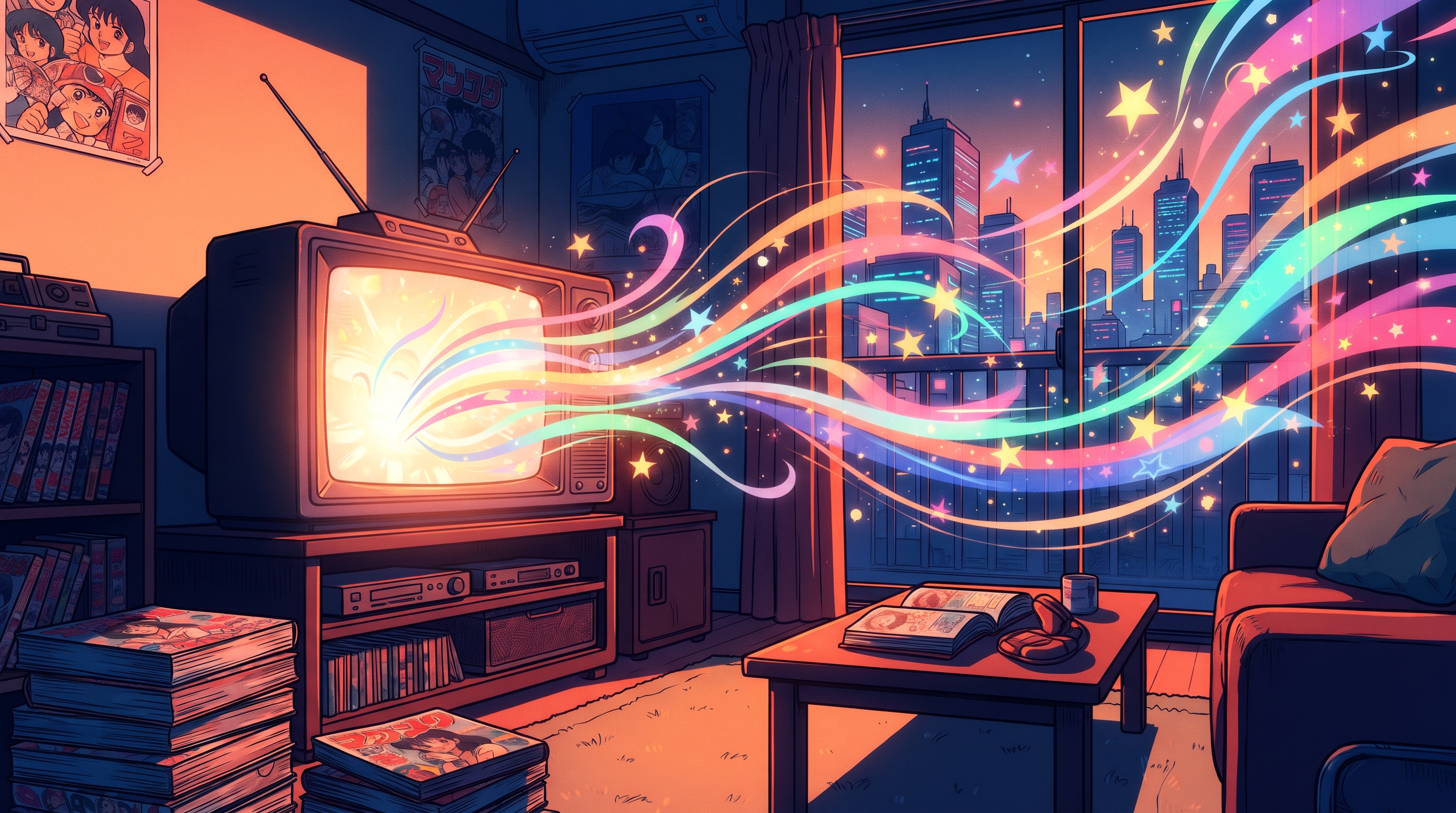
- The Revival of 80s and 90s Retro Anime: Thanks to the global popularity of Lo-fi Hip Hop and Japanese City Pop music, hand-drawn cel animation from the 1980s and 90s has been rediscovered by young international fans as cool, nostalgic art.
2. My Personal Journey — From Childhood TV Screens to Stories That Moved Me as an Adult
Five Classics That Hooked a Kid Who Preferred Books and Outdoor Sports
I am a Japanese man in my 40s. To be honest, when I was a child, I was not very interested in reading manga. I preferred reading regular books or playing sports outside with friends.
Even so, there were five anime on TV (and in frequent reruns) that I completely fell in love with and never wanted to miss:
- Dragon Ball / 『DRAGON BALL』 (Rank #5, 1985–)
As a kid who loved being active outdoors, the energy of Kamehameha waves and Super Saiyan transformations excited me like nothing else. Today, it is practically a shared cultural language across Latin America, North America, and Europe.
- Fist of the North Star / 『北斗の拳』 (Rank #16, 1984–)
The dramatic lives of the characters and Kenshiro’s famous catchphrase—”You are already dead” (Omae wa mou shindeiru)—left a huge mark on me. It became a massive phenomenon in France in the 80s and 90s under the title Ken le Survivant, and that catchphrase is still one of the most famous anime memes on the English-speaking internet.
- Lupin the Third / 『ルパン三世』
I admired Lupin’s cool, slightly grown-up style, lighthearted humor, and stylish jazz music. In Italy, frequent TV reruns turned Lupin into a beloved national hero.
- Kiteretsu Encyclopedia / 『キテレツ大百科』
As a kid who loved books, I was fascinated by the idea of building strange inventions using an old encyclopedia, and I loved the cute robot character Korosuke. The show was widely broadcast across Asia—including Taiwan, Hong Kong, and Southeast Asia—and remains a warm childhood memory for people of my generation there too.
- Saint Seiya: Knights of the Zodiac / 『聖闘士星矢』
I was obsessed with the armor (Cloth) designs, constellation themes, and Pegasus Meteor Fist attacks. Its mix of Greek mythology and stories of friendship became legendary in countries like Brazil, Mexico, France, and Italy, rivaling Dragon Ball in popularity.
Two Masterpieces That Pulled Me Back In as an Adult
After growing up, I spent many years away from anime and manga. However, two very different series brought me right back in as an adult:
- Demon Slayer: Kimetsu no Yaiba / 『鬼滅の刃』 (Rank #7, 2016–)
Selling over 220 million copies in just 23 volumes, this series became a historic phenomenon. It carries the same classic themes of family love and never giving up that I loved in Dragon Ball and Saint Seiya, combined with emotional storytelling and breathtaking animation that can move adults to tears.
- Orb: On the Movements of the Earth / 『チ。-地球の運動について-』
Unlike traditional action stories about physical strength, this series shocked me with its deep, philosophical theme: passing down knowledge and human conviction across generations. Its story about the historical conflict between science and religion has resonated strongly with international viewers, sparking deep discussions online. It made me realize just how mature and intellectually rewarding Japanese anime has become.
3.Final Thoughts
From magazine serialization, paperback books, TV anime, goods, and movies to endless reruns—that classic cycle built the foundation of Japanese manga and anime. Today, global streaming platforms like Netflix are creating a new era of hits.
The stories that captivated even a non-manga-reading kid like me are still crossing borders and inspiring fans around the world. While cherishing those childhood classics, I look forward to discovering more modern masterpieces that speak to us as adults.
What is your favorite manga, and why do you love it? Share your thoughts in the comments!